
If you are shopping for limestone pavers in Melbourne right now, here is the straight answer before you read anything else: limestone is one of the best outdoor paving options available for Melbourne homes when selected in the right finish and sealed correctly. It handles our variable climate well, looks stunning around pools, and costs less than many homeowners expect. But there are a few traps worth knowing about before you part with a single dollar.
Melbourne throws everything at outdoor stone. Scorching January afternoons. Cold, wet August mornings. Sudden spring downpours. Your paving needs to handle all of that without cracking, fading, staining, or becoming a slip hazard. Limestone, used correctly, handles it reliably. Used incorrectly, it becomes a maintenance headache that could have been avoided.
So let’s walk through everything that actually matters. Finishes, pool suitability, durability in Melbourne’s climate, cost, and how limestone compares to travertine and sandstone. By the end, you will know exactly what to look for and what to avoid.
Verified Quick Fact
Standards Australia requires outdoor natural stone paving to meet AS/NZS 4455 for material quality and durability in Australian outdoor conditions. Always confirm your supplier can provide compliant product specifications.
What Makes Limestone a Genuinely Unique Paving Stone
Limestone is a sedimentary rock formed from ancient marine organisms over millions of years. That natural origin gives it a warm, soft colour palette that no manufactured product fully replicates. Think creamy whites, sandy buffs, warm greys, and gentle beige tones. Every slab is genuinely unique.
What sets limestone apart from many other paving stones is its density range. Some limestone varieties are dense and exceptionally durable. Others are softer and more porous. That distinction matters enormously for outdoor Melbourne use. Denser limestone handles moisture, UV exposure, and heavy foot traffic far more reliably than softer grades.
Additionally, pale limestone stays noticeably cooler underfoot than many other paving materials. On a 35-degree Melbourne summer afternoon, that thermal benefit is not just a detail. It is genuinely comfortable and a practical reason many Melbourne homeowners choose limestone for pool surrounds and outdoor entertaining areas.
Cool Underfoot
Pale limestone reflects rather than absorbs heat. Barefoot comfort is significantly better than darker alternatives in Melbourne summers.
Natural Colour Range
Creamy whites, sandy buffs, warm greys. No two slabs are identical. Each brings genuine, unrepeatable natural character.
Multiple Finishes
Available honed, tumbled, brushed, and sandblasted. Each finish suits different Melbourne outdoor settings and safety requirements.
Versatile by Nature
Pool surrounds, alfresco areas, paths, and feature walls. Limestone adapts beautifully to almost every pedestrian area, though high-impact vehicle zones like driveways are best left to denser materials like granite or bluestone.
Choosing the Right Limestone Finish for Your Melbourne Outdoor Area
This is where most Melbourne homeowners make their first and most expensive mistake. They see honed limestone in a showroom. It looks elegant and refined. They picture it around their pool. Then they install it, get their first rainy day, and discover it becomes dangerously slippery when wet. The finish you choose changes absolutely everything.
Honed Limestone – Best for Covered and Dry Entertaining Zones
Honed limestone has a smooth, matte surface with minimal sheen. It looks refined without being glossy. This finish suits dry entertaining areas, covered alfresco dining zones, and outdoor kitchen spaces beautifully. However, honed limestone demands extra caution anywhere water is present. Always apply a non-slip sealer or select a different finish for uncovered pool surrounds.
That said, honed limestone is arguably the most elegant finish available. Many Melbourne homeowners use it for covered pergola floors, internal-to-external transition areas, and sheltered outdoor spaces. The results are consistently impressive when the application is appropriate.
Tumbled Limestone Pavers – Character and Grip for Casual Outdoor Areas
Tumbled limestone pavers have textured, slightly rounded edges and an aged, rustic appearance. The tumbling process naturally increases surface grip. That makes tumbled finishes far more suitable for rain-exposed areas, garden pathways, and zones around water features.
Melbourne’s garden suburbs respond particularly well to the tumbled look. It complements native plantings, timber decking, and relaxed outdoor entertaining styles. The organic texture also hides minor surface marks far better than smoother finishes.
Brushed and Sandblasted Limestone – Safety First for Wet Zones
Brushed limestone sits between honed and tumbled. It has more texture than honed but a cleaner, more consistent appearance than tumbled. Sandblasted limestone delivers the highest natural slip resistance of any standard finish. Both options perform well around Melbourne pool surrounds and uncovered areas exposed to seasonal rain. Confirm the slip resistance rating before purchasing for wet zones.
Slip Resistance – Verified Australian Standard
WorkSafe Victoria guidelines recommend outdoor wet area surfaces achieve a minimum P4 or P5 slip resistance rating under AS 4586. Confirm your limestone finish meets the appropriate rating for pool surrounds and rain-exposed Melbourne outdoor zones before installation.
Why Limestone Pavers Work so Well Around Melbourne Pools
Melbourne homeowners installing pool surrounds face a very specific set of demands. The stone must look great. It must stay cool underfoot in summer. It must grip wet feet safely. And it must survive years of chlorinated water splashes, UV exposure, and Melbourne’s frosty winter mornings without degrading. Limestone ticks most of those boxes better than many alternative materials.
The primary advantage of limestone around pools is its light colour. Pale limestone pavers reflect sunlight rather than absorbing it. On a hot Melbourne afternoon, that distinction is not minor. Dark stones can reach surface temperatures that are genuinely uncomfortable and potentially unsafe for barefoot contact around a pool.
Handling Chlorine and Chemical Exposure at the Pool Edge
Chlorine splashes, salt spray, and pool chemicals are highly alkaline and corrosive by nature. Unsealed limestone is incredibly vulnerable to salt-attack and chemical erosion over time, which causes the surface to pit and crumble. Applying a high-quality, salt-resistant penetrating sealer creates an invisible barrier that allows the stone to withstand splash zones comfortably.
Always select a dense-grade limestone for pool surrounds. Confirm the product specification with your supplier before ordering. Dense limestone absorbs less water, resists chemical penetration more effectively, and holds up far better through Melbourne’s seasonal wet periods. To explore available options for your pool project, browse Domko’s limestone range and see the full paving solutions collection.
Pro Tip for Melbourne Pool Surrounds
Specify a brushed or sandblasted limestone finish rated P4 or above for all wet pool zones. Seal before first use and reseal every two to three years. This routine maintains chemical resistance and prevents moisture ingress through Melbourne’s seasonal rain cycles.
Limestone Paving Durability in Melbourne’s Climate – the Real Story
Melbourne gives your outdoor paving a proper workout. Winter mornings in outer suburbs like Narre Warren and Cranbourne can dip toward zero degrees. Summer afternoons in the eastern suburbs regularly push 38 to 40 degrees. Spring delivers unpredictable heavy downpours. Your paving needs to handle all of it without complaint, season after season.
Properly sealed, dense-grade limestone handles Melbourne’s climate reliably. However, outer suburbs like Narre Warren and Cranbourne experience moderate to heavy winter frosts, dipping below zero. Frost damage occurs when water penetrates the stone, freezes, expands, and fractures it from within. Deeply sealing the stone completely blocks this moisture ingress, preventing freeze-thaw damage.
Does Limestone Fade Under Melbourne’s UV Exposure?
Limestone holds its colour exceptionally well under sustained UV exposure. Unlike some timber or synthetic alternatives, limestone does not bleach out noticeably over years of Australian sunshine. Many varieties develop a subtle weathered patina over time that adds character rather than looking tired or degraded.
Always check the specific product’s UV performance with your supplier. Not all limestone is geologically identical. Imported varieties from different sources can behave differently under Australian sun exposure. Confirm performance specifications before committing to a large order.
How Limestone Compares to Other Paving Materials for Outdoor Lifespan
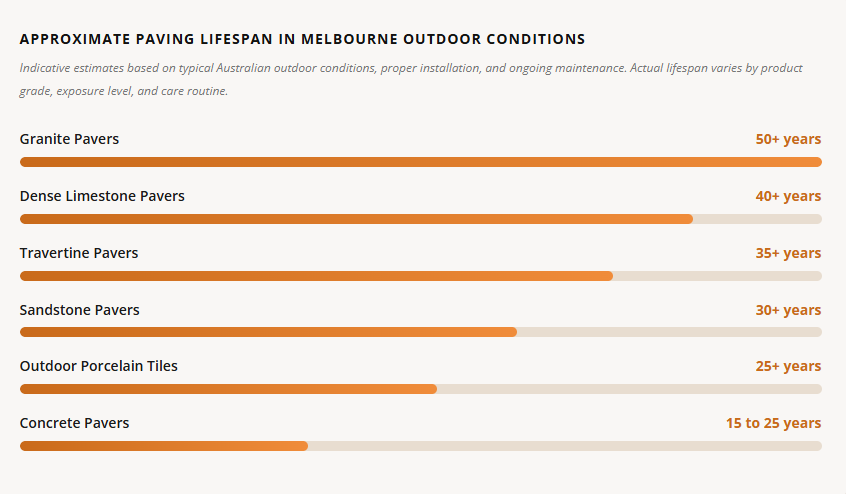
Limestone vs Travertine in Melbourne – Which Stone Suits Your Project?
This is easily the most common question Melbourne homeowners ask. Both are natural stones, warm, earthy tones, and suit outdoor patios, pool surrounds, and alfresco areas brilliantly. So what actually separates them?
The simplest way to understand the difference: limestone delivers a cleaner, more consistent surface. Travertine has natural voids and a more layered, textured appearance. Prefer a refined, smooth contemporary finish? Limestone typically wins. Love that European-villa rustic texture with visible character? Travertine delivers that better than anything.
Limestone vs Travertine – Key Differences for Melbourne Outdoor Projects
| Factor | Limestone | Travertine |
|---|---|---|
| Surface Character | Smooth, consistent, refined | Textured, veined, organic voids |
| Colour Range | Creamy whites, buffs, warm greys | Warm honey, walnut, ivory |
| Pool Surround Use | Excellent with correct finish | Excellent with filled grade |
| Maintenance | Seal regularly, pH-neutral clean | Fill voids, seal regularly |
| Heat Underfoot | Cool in pale tones | Cool in pale tones |
| Frost Resistance (Sealed) | Good with dense grade | Good when filled and sealed |
| Design Style | Contemporary, coastal, Hamptons | Mediterranean, rustic, classic |
| Supply Price Range | $40 to $120 per m2 | $45 to $130 per m2 |
Neither stone is inherently better than the other. Your choice depends on your aesthetic brief and the specific application. Explore both at Domko’s travertine range and the limestone collection to compare finishes with physical samples in natural light.
How Limestone Compares to Sandstone for Melbourne Outdoor Patios
Sandstone is a well-established Melbourne outdoor favourite. Its warm ochres, terracottas, and earthy tones work brilliantly with Australian gardens, native plantings, and relaxed backyard settings. So when would you choose limestone instead?
The answer usually comes down to colour direction and surface consistency. Limestone delivers cooler, more neutral tones. Melbourne homeowners renovating with a coastal, Hamptons, or modern Mediterranean brief tend to gravitate toward limestone precisely because it feels crisp and refined rather than warm and earthy.
From a durability standpoint, both perform admirably in Melbourne outdoor conditions when sealed correctly. Sandstone is generally more porous than dense-grade limestone. Both require regular sealing. The Domko sandstone range is worth exploring if warmer, earthier tones better suit your design direction. Comparing physical samples side by side in natural Melbourne outdoor light remains the most reliable way to make your final decision.
Understanding Limestone Paving Costs in Melbourne Before You Budget
Limestone paving cost in Melbourne varies more than most buyers initially expect. Several factors influence the final figure, and understanding them upfront saves a lot of mid-project surprises.
What Drives the Price of Limestone Pavers in Melbourne
- Stone grade and density: Denser, higher-grade limestone costs more upfront but delivers longer lifespan and reduced maintenance costs over time.
- Finish type: Standard honed and tumbled finishes sit at similar price points. Custom finishes like sandblasting may carry a slight premium.
- Paver thickness: Outdoor pavers typically range from 20mm to 40mm. Thicker pavers cost more per square metre but offer increased structural integrity.
- Slab format size: Larger format pavers often carry a modest price premium over standard sizes due to increased manufacturing complexity.
- Order quantity: Larger project orders frequently attract better per-square-metre pricing from suppliers. Ask about volume pricing upfront.
- Stone origin:Almost all high-quality residential limestone pavers are imported from renowned global quarries. Variations in international shipping rates and container availability can cause supply pricing to fluctuate compared to locally quarried sandstones or bluestones.
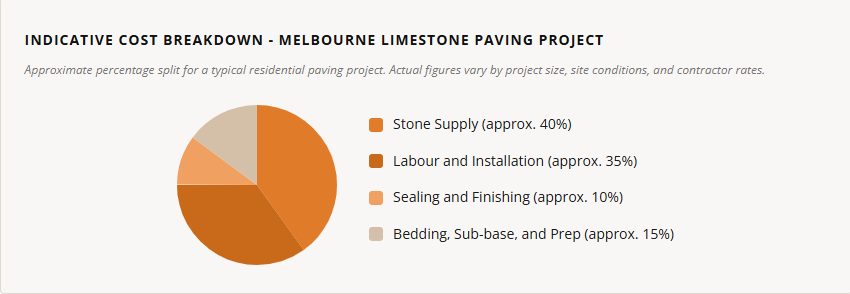
As a working guide, Melbourne limestone paver supply typically ranges from approximately $40 to $120 per square metre depending on grade, finish, and format. Installation, site preparation, and sealing all add further to the total project cost. Always request a fully itemised written quote from your installer before committing.
For accurate current product pricing and to find the right grade for your budget, contact Domko directly. The team can guide you through available options, suitable specifications for your application, and realistic cost expectations for your Melbourne project.
Limestone Paving Colour Variations – What to Genuinely Expect
Natural colour variation surprises first-time limestone buyers more than almost anything else. Limestone is a natural sedimentary stone. No two slabs are identical. This is genuinely one of its most beautiful characteristics. However, it can catch homeowners off guard if they are expecting perfectly uniform tiles like porcelain delivers.
Limestone colours typically range across creamy whites, pale buffs, sandy yellows, warm greys, and soft beige tones. Within a single batch, individual pavers may vary subtly in shade and veining. When laid across a large outdoor area, that natural variation creates an organic, living surface that looks genuinely luxurious rather than manufactured.
Matching Limestone Colours to Melbourne’s Outdoor Design Styles
Lighter limestone tones suit coastal-style Melbourne homes beautifully. Think Bayside properties, Mornington Peninsula escapes, and contemporary Hamptons renovations. Warmer buff and sandy tones integrate naturally with lush garden settings, earthy landscape plantings, and the relaxed outdoor entertaining styles found across Melbourne’s eastern and outer suburbs.
The Domko paver colour range provides a strong visual reference for available limestone tones. Requesting physical samples before committing to a full order is always strongly recommended. Colours look genuinely different in showroom lighting compared to natural Melbourne outdoor light, and that difference can be significant.
Limestone Pavers Maintenance and Sealing – the Honest Routine
Let’s be upfront about this. Limestone needs a bit more attention than a set-and-forget concrete slab. However, the maintenance routine is genuinely manageable when set up correctly from day one. Most Melbourne homeowners who complain about limestone maintenance skipped the sealing step or used the wrong cleaning products.
Why Sealing Before First Use is Non-Negotiable
Apply a quality penetrating stone sealer before your limestone pavers ever see foot traffic. This is not optional and it is not overcautious. A penetrating sealer soaks into the stone and creates an internal barrier against moisture, staining, and acid damage. Surface sealers that sit on top of the stone are less durable and can peel over time. Choose penetrating over surface sealing every time.
Reseal every two to three years as standard practice. Melbourne’s seasonal rain, UV cycles, and temperature variation gradually reduce sealer effectiveness. A simple water bead test tells you exactly when resealing is overdue – pour a small amount of water on the surface. If it absorbs rather than beading up, it is time to reseal.
1. Clean Thoroughly Before Sealing
Remove all dust, organic debris, and stains using a pH-neutral stone cleaner. Allow the surface to dry completely before applying any sealer product.
2. Apply a Penetrating Stone Sealer
Apply evenly with a brush or roller. Allow the first coat to absorb fully before applying a second coat if the manufacturer recommends one for your specific limestone grade.
3. Allow Full Cure Time
Allow the sealer to cure fully before foot traffic. Typically 24 to 48 hours depending on the product and Melbourne’s ambient temperature at application time.
4. Clean Regularly with pH-Neutral Products
Clean monthly with a pH-neutral stone cleaner and warm water. Never use bleach, vinegar, citrus juice, or acid-based cleaners on limestone. These etch the surface and strip protective sealer.
5. Run the Water Bead Test Every Spring
Pour a small amount of water on the surface each Melbourne spring. If water absorbs rather than beading, schedule resealing immediately before the wet season arrives.
What Actually Damages Limestone Pavers Outdoors
The main enemies of limestone are acidic substances and prolonged unsealed moisture exposure. Red wine, citrus juice, vinegar, and cleaning products with any acid content can etch the limestone surface permanently if left untreated. Act immediately on spills. Wipe rather than leaving liquid to penetrate.
Additionally, avoid high-pressure washing on limestone. The force strips sealer, dislodges jointing sand, and eventually pits the stone surface. A soft brush, warm water, and pH-neutral cleaner achieve the same cleaning result without any surface damage.
Creative Limestone Paving Ideas for Melbourne Outdoor Spaces
Beyond standard rectangular pavers, limestone opens up some genuinely exciting design directions. Melbourne homeowners are increasingly adventurous with natural stone layouts. Here are some approaches worth considering for your specific outdoor project.
Limestone in a Crazy Paving Layout
While crazy paving is highly popular in Melbourne, it is almost exclusively supplied in bluestone, quartz, or sandstone; homeowners looking for that pale limestone look typically utilize randomly laid tumbled rectangular pavers to achieve a similar organic European aesthetic. The effect is organic, characterful, and surprisingly timeless. It suits relaxed Melbourne garden settings, cottage-style outdoor areas, and informal pathways through landscaped grounds. Browse Domko’s crazy paving options to see how limestone pieces transform an outdoor space through this unconventional approach.
Limestone as Stepping Stones Through Melbourne Garden Beds
Individual limestone stepping stones set through native garden beds, lawn areas, or gravel create a beautiful, organic outdoor effect. The pale stone contrasts brilliantly with deep green plantings and creates a sense of casual, intentional design. Explore Domko’s stepping stone range for formats that suit this approach and complement your existing garden setup.
Combining Limestone with Other Natural Stones for Visual Contrast
Some of Melbourne’s most striking outdoor spaces combine limestone with bluestone, granite, or sandstone for zone definition and visual interest. For example, limestone in the main entertaining area transitions to Domko bluestone along side pathways. The contrast of warm limestone against cool, dark bluestone is genuinely dramatic and a design direction that works exceptionally well in both contemporary and traditional Melbourne homes.
For pool projects that need a complete, integrated look, check out Domko’s skimmer lids that complement natural stone pool surrounds cleanly. These finishing details matter far more than most homeowners realise once the full outdoor space is completed and photographed.
So – Are Limestone Pavers Right for Your Melbourne Outdoor Space?
For most Melbourne homeowners, the answer is a confident yes. Limestone pavers in Melbourne deliver a rare combination of natural beauty, thermal comfort, design versatility, and genuine long-term durability when chosen in the right grade and finish. They suit Melbourne’s climate, they suit the lifestyle, and they suit the broad range of outdoor design directions Melburnians favour in 2026.
The three things to get right before buying: confirm the stone grade is appropriate for your specific application, select the correct finish for your wet or dry zone requirements, and commit to sealing the stone before and after installation. Get those three things right and limestone will serve your Melbourne outdoor space reliably for decades. Get them wrong and you create avoidable maintenance problems.
You have now done the research. The next step is straightforward. Reach out to Domko. Look at physical samples in natural light. Ask about grades and finishes in stock. Then get the outdoor space you have been planning. You have clearly done the homework. Time to make it happen.
Frequently Asked Questions
What are the disadvantages of limestone paving?
Limestone is softer than granite and can scratch or etch without proper sealing. Acidic substances like lemon juice and vinegar damage the surface on contact. Regular sealing and prompt spill cleanup prevent most issues and extend the stone’s life significantly.
Are limestone pavers expensive?
Limestone sits in the mid-range for natural stone paving. It costs more than concrete pavers but less than premium granite. Finish type, grade, and thickness all influence the final per-square-metre price.
How much do limestone pavers cost per square metre?
In Melbourne, the raw material supply for limestone pavers typically ranges from $40 to $120 per square metre. However, when you factor in professional site preparation, excavation, a compacted sub-base, bedding mortar, flexible grouting, and initial sealing, the total professionally installed project cost generally ranges between $225 and $445+ per square metre.
What is better, travertine or limestone?
Neither is universally superior. Limestone delivers a smoother, more consistent contemporary surface. Travertine offers rustic texture and Mediterranean character with natural voids. The right choice depends entirely on your design brief and maintenance preference.
Which is better, sandstone or limestone paving?
Sandstone offers warm, earthy tones that suit relaxed Australian garden settings. Limestone delivers cooler, more neutral tones suited to contemporary and coastal design briefs. Both perform reliably in Melbourne outdoor conditions when correctly sealed. Your preference for warm versus cool tones should guide the choice.
Do limestone pavers need sealing?
Yes. Sealing is essential. Apply a penetrating stone sealer before first use and reseal every two to three years. Sealing protects against staining, moisture absorption, acid etching, and frost-related surface damage in Melbourne’s variable climate.
Are limestone pavers cheaper than travertine?
Limestone and travertine sit in a very similar supply price range. The specific finish, grade, thickness, and supplier pricing determine which costs more for a given project. Request itemised quotes for both before making a final decision.
Is it cheaper to lay concrete or pavers?
Poured concrete is generally cheaper upfront. However, natural stone pavers like limestone offer a significantly longer lifespan, better aesthetics, easier repair of individual sections rather than full resurfacing, and a greater contribution to property value over time.
How much is limestone paving per m2 in Melbourne?
Melbourne limestone paving supply prices generally range between $40 and $120 per m2. Premium honed, large-format, or imported varieties may cost more depending on grade and finish. Contact Domko directly for current pricing on specific products in their range.
What is cheaper than limestone pavers?
Concrete pavers and some sandstone varieties typically cost less than limestone. Entry-level porcelain tiles can also carry a lower supply price point, though they offer a very different surface character and aesthetic outcome.
Can limestone pavers handle Melbourne’s occasional frost?
Properly sealed, dense-grade limestone handles Melbourne’s climate well. However, outer suburbs like Narre Warren and Cranbourne experience moderate to heavy winter frosts that dip below zero. Deeply sealing the stone with a penetrating sealer is mandatory, as it completely blocks moisture ingress and prevents destructive freeze-thaw fracturing within the stone.
Are limestone pavers slippery when wet?
Honed limestone can become slippery when wet. Tumbled, brushed, or sandblasted finishes provide significantly better grip. For pool surrounds and uncovered outdoor areas, always specify a slip-resistant finish rated P4 or P5 under AS 4586 to comply with Australian safety guidelines.
How do I clean limestone pavers outdoors?
Use a pH-neutral stone cleaner with warm water and a soft brush or mop. Never use bleach, vinegar, citrus-based cleaners, or high-pressure washers on limestone. These strip protective sealer, etch the surface, and cause permanent damage that is difficult and costly to repair.