
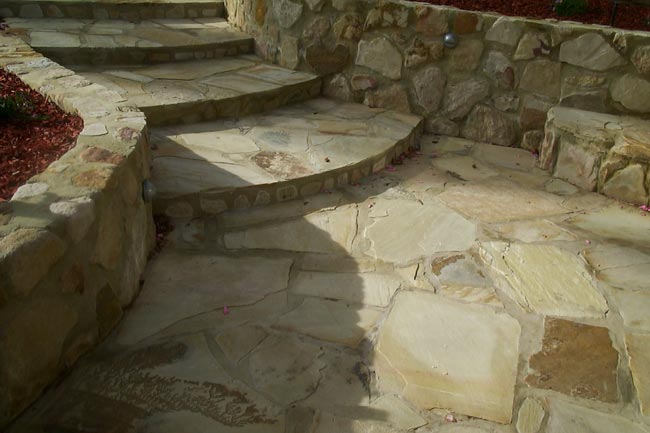
Paving Sandstone is one of Melbourne’s most enduringly popular outdoor surface choices — and for genuinely good reasons. It looks warm and natural. It ages beautifully. And it suits the Australian outdoor lifestyle like few other materials can. So yes, sandstone is a solid choice — but only when you understand its strengths, its limits, and what Melbourne’s climate demands of it.
Melbourne homeowners face a unique challenge. Summers hit hard with scorching UV and dry heat. Winters bring cold, wet weeks that test every outdoor surface. Then there are those bizarre four-seasons-in-one-day situations that stone has to simply shrug off. The good news? Quality natural sandstone handles all of that well — provided it is sealed correctly and chosen in the right finish.
This guide cuts through the fluff. It covers durability, colour options, pool suitability, maintenance, cost, and honest comparisons with other natural stones. By the end, you will know exactly whether sandstone suits your specific outdoor project — and what to look for when you buy.
What Makes Sandstone a Natural Choice for Outdoor Paving
Sandstone has been used in outdoor construction for thousands of years. That track record alone tells you something useful. It is a sedimentary rock with a distinctively grainy texture. The surface feels natural underfoot. It does not look manufactured or clinical.
For Melbourne homeowners designing patios, garden paths, alfresco areas, and pool surrounds, that natural quality matters enormously. No two slabs look identical. The variation in grain, colour, and surface detail gives outdoor spaces a character that porcelain or concrete simply cannot replicate.
Beyond aesthetics, sandstone offers practical strengths. It is naturally textured, which provides grip in its rougher finishes. It stays relatively cool underfoot compared to darker materials. Lighter tones like ivory and mint reflect summer heat rather than absorbing it — a real advantage when you are walking barefoot on a 35-degree Melbourne afternoon.
Domko stocks a wide range of natural sandstone pavers in popular Australian finishes. Options include Sandstone Ivory Honed, Sandstone Teak Bullnose, Mango Indian Sandstone, and Sandstone Dhari Pavers — each suited to different design briefs and budget levels.
What Sandstone Is Made Of
Most natural sandstone used in Australian outdoor paving comes from India. Indian sandstone quarries produce consistent, high-quality stone that suits our climate. The mineral composition — silica-rich with varying iron oxide content — gives it those warm golden, beige, teak, and ivory tones.
The density of sandstone varies between formations. Denser sandstone is harder, less porous, and more durable. Always check the specific product’s porosity rating before using it in high-exposure areas like pool surrounds or driveways.
How Sandstone Performs in Melbourne’s Climate
Melbourne’s weather is famously unpredictable. Summer days can crack 40 degrees. Winter mornings bring frost to outer suburbs. And spring will happily deliver heavy rain followed by blistering sunshine within the same week.
Natural sandstone handles thermal cycling well. It expands and contracts at a rate compatible with standard outdoor installation methods. However, moisture is its greatest challenge. Unsealed sandstone absorbs water. Over time, freeze-thaw cycles in Melbourne’s cooler months can cause surface spalling or cracking in porous stone.
The solution is straightforward — seal it properly and reseal it regularly. A penetrating silicone-based sealer creates a moisture barrier without altering the stone’s appearance. This dramatically extends the paver’s lifespan and prevents the staining that occurs when water carries minerals or organic matter into the stone.
UV Exposure and Colour Stability
Melbourne’s UV index is high year-round. Lighter sandstone tones like ivory and mint are more UV-stable than some darker varieties. Over several years, unsealed sandstone may lighten slightly — a process called weathering. Many homeowners actually prefer this aged, patinated look.
For those who want colour retention, an enhanced colour sealer adds depth and vibrancy. The difference is visible. Compare the appearance of Mango Tiles with Enhanced Sealer versus unsealed stone in Domko’s gallery and you will see exactly what sealing achieves.
Based on material properties documented by the natural stone industry, sandstone performs strongly in heat reflectivity and natural texture. Its main limitation is porosity — which sealing directly addresses.
Sandstone Paving Colour Options and Surface Finishes
One of sandstone’s biggest selling points is its colour range. You are not picking from a catalogue of manufactured hues. Instead, you are working with natural mineral variation — and that creates something that genuinely lives and breathes in your garden.
Common Sandstone Colours Available in Melbourne
- Ivory: Clean, warm white-beige tones. Suits contemporary and coastal homes. Very popular for Melbourne pool surrounds.
- Teak / Teakwood: Rich golden-brown tones. Works beautifully with timber decking and lush garden beds.
- Mango: Warm amber and peach tones with earthy variation. A Melbourne favourite for outdoor entertaining areas.
- Mint: Soft grey-green tones with subtle variation. Pairs well with modern dark-frame architecture.
- Rainbow: A multi-tonal blend of reds, oranges, browns, and creams. Creates visual interest in larger paved areas.
- Modak: Deep brownish-red tones with a rustic character. Suits heritage and character homes.
Domko carries a wide selection including Honed Ivory Sandstone, Mango Indian Sandstone, Sandstone Rainbow Honed, and Mint Sandstone with Black Edges — among many others.
Surface Finish Options Explained
The finish you choose affects both aesthetics and safety. Here is a quick breakdown of the most common options:
| Finish | Texture | Slip Resistance | Best Use |
|---|---|---|---|
| Honed | Smooth, matte | Moderate | Indoor/outdoor covered areas |
| Natural / Sawn | Earthy, slight split texture | Good | Patios, garden paths |
| Sandblasted / Acid Washed | Even, finely textured grain | Excellent | Pool surrounds, high-traffic wet areas |
| Wet Look Honed | Smooth, sealed appearance | Moderate | Feature areas, dry zones |
For any area exposed to water — including Melbourne pool surrounds, outdoor showers, and garden steps — always specify a finish rated P4 or higher for wet pedestrian use.
Sandstone vs Travertine Pavers: An Honest Side-by-Side
This comparison comes up constantly. Both are natural stones, look stunning outdoors and both suit Melbourne’s alfresco lifestyle. So what actually separates them?
The short answer: they are different rock types with different structures. Sandstone is a clastic sedimentary rock — built from compressed sand particles. Travertine is a limestone-based stone formed from calcium carbonate deposited by mineral springs. Their physical differences affect how they behave outdoors.
| Property | Sandstone | Travertine |
|---|---|---|
| Surface Texture | Grainy, slightly rough | Smoother with natural pitting |
| Porosity | Moderate to high | Moderate (pits trap moisture) |
| Colour Range | Ivory, teak, mango, rainbow, mint | Silver, classic beige, warm cream |
| Heat Underfoot | Cooler (lighter tones) | Cooler (naturally) |
| Slip Resistance | Good (textured finishes) | Good (natural surface texture) |
| Maintenance | Sealing required | Sealing and pit-filling recommended |
| Typical Cost | Mid-range | Mid to premium |
| Best For | Patios, paths, pool surrounds, steps | Pool coping, entertaining areas |
Travertine’s natural pitting creates character but also traps debris, pool chemicals, and moisture if left unfilled and unsealed. Sandstone’s grainy surface is generally more consistent and easier to clean once properly sealed.
Both stones work beautifully in Melbourne outdoor projects. Domko stocks Travertine Silver and Travertine Classic alongside its full sandstone range — so comparing them in person at the Doveton showroom makes a lot of sense before you commit.
Using Sandstone Around Melbourne Pools: What You Need to Get Right
Pool surrounds are one of the most popular applications for natural sandstone in Melbourne. The warm tones look incredible next to water. The natural texture provides the grip you need around a wet area. And sandstone stays noticeably cooler underfoot than darker stones or concrete on a hot day.
However, pool surrounds demand specific product choices. Not every sandstone product is appropriate here. Here is what you need to check before buying.
Slip Rating Must Meet Australian Standards
Under AS 4586 and AS 4663, wet pedestrian surfaces around pools must meet minimum slip-resistance ratings. For bare feet on wet pool surrounds, a P4 or P5 rating is required. Smooth-honed sandstone typically does not meet this threshold on its own.
Specify a natural split, sandblasted, or sawn sandstone finish for pool areas. Alternatively, look for products that carry a certified P4 or P5 rating from the supplier. Domko’s product range includes sandstone finishes purpose-suited for wet-area applications.
Chemical Exposure from Pool Water
Chlorine and pool chemicals can degrade unsealed natural stone over time. A quality penetrating sealer creates a protective barrier. This slows chemical ingress and simplifies ongoing cleaning. Resealing every 2 to 3 years in pool surround applications is advisable — slightly more frequently than for general patio use.
Coping and Edge Details
The coping tiles along your pool’s edge serve both a safety and aesthetic function. Sandstone Bullnose Coping Tiles—including the Sandstone Teak Bullnose and Sandstone Drop Face (Rebate) profiles—provide a rounded, safe edge that is comfortable to grip and visually clean. The Drop Face profile is particularly popular in Melbourne pool projects for its sharp, contemporary finish.
Sandstone Paving Maintenance and Sealing: The Right Approach
Here is the honest truth — sandstone is not a set-and-forget material. It rewards homeowners who look after it with decades of beautiful performance. But neglect it, and you will see staining, discolouration, and surface deterioration far sooner than necessary.
The maintenance requirements are not burdensome. They are simply consistent. Here is a practical approach suited to Melbourne conditions.
Initial Sealing After Installation
Seal new sandstone pavers within the first few weeks of installation. Allow the stone to cure fully and dry out before applying sealer. Applying sealer to damp stone traps moisture and causes problems later. Choose a penetrating silicone or silane-siloxane based sealer for outdoor sandstone. Avoid surface-coat sealers that sit on top of the stone — they peel and trap moisture beneath.
Ongoing Maintenance Schedule
- Weekly: Sweep debris to prevent organic staining from leaf tannins and mulch.
- Monthly: Rinse with clean water. For stubborn grime, use a pH-neutral stone cleaner.
- Annually: Inspect grout lines and sealer condition. Look for cracks, efflorescence, or colour changes.
- Every 3-5 years: Reapply penetrating sealer. Pool surrounds may need resealing every 2-3 years.
What to Avoid
- Avoid acidic cleaners — vinegar, citrus-based products, and bleach damage sandstone.
- Avoid high-pressure washing on a regular basis — it strips sealer and can erode softer stone surfaces.
- Avoid oil-based sealers unless specifically formulated for natural stone.
Maintaining sandstone properly is genuinely straightforward. Most Melbourne homeowners find it less demanding than timber decking — which needs sanding, oiling, and board replacement over time.
Sandstone Paving Cost Per Square Metre in Melbourne
Cost is always part of the conversation. Sandstone sits in a comfortable mid-range bracket for natural stone paving — more affordable than some premium granites, generally competitive with travertine, and more characterful than porcelain.
Here is a realistic cost breakdown for Melbourne homeowners:
| Item | Approximate Range (AUD) |
|---|---|
| Natural sandstone pavers (supply only) | $40 – $120 per sqm |
| Standard installation (labour) | $60 – $110 per sqm |
| Sub-base preparation (gravel and sand) | $15 – $35 per sqm |
| Penetrating sealer (supply and apply) | $8 – $20 per sqm |
| Bullnose coping tiles (pool edge) | $80 – $160 per linear metre |
Total installed cost for a standard Melbourne patio typically falls between $115 and $265 per square metre. Variables include stone grade, thickness, site accessibility, and the complexity of the layout pattern chosen.
What Drives the Price Up
- Thicker stone (40mm+ for heavy traffic areas)
- Premium finishes like sandblasted, calibrated, or custom-cut curved profiles
- Larger format tiles requiring more care during installation
- Complex patterns such as random crazy paving or circle inlays
- Remote or difficult access sites across Melbourne suburbs
Domko supplies natural stone directly. Buying direct from a Melbourne importer eliminates middlemen and keeps costs more competitive. Contact the Doveton showroom for a current quote tailored to your project.
Sandstone Paving Design Ideas for Melbourne Outdoor Spaces
Sandstone is incredibly versatile. It works in compact courtyard gardens and sprawling alfresco zones. It suits modern architectural homes and traditional brick character houses alike. The key is matching the stone tone and finish to the overall design intent.
For Contemporary Melbourne Homes
Ivory Honed Sandstone in large-format tiles creates a clean, fresh outdoor floor. Pair it with black window frames, a charcoal feature wall, and minimal landscaping for a look that photographs brilliantly. Mint Sandstone with black grout lines also reads as very contemporary.
For Heritage and Character Properties
Modak or Rainbow Sandstone in a random crazy paving pattern suits Federation and Victorian-era Melbourne homes. The organic, irregular shapes echo the character of the building and integrate beautifully with established garden plantings.
For Family Outdoor Entertaining Areas
Teak or Mango Sandstone in a straightforward grid pattern provides warmth and practicality. These tones complement timber pergolas and outdoor furniture. They also hide day-to-day grime better than very pale tones — practical with kids and dogs in the mix.
For Pool Surrounds
Ivory Honed Sandstone coping with a contrasting Bluestone Crazy Paving surround creates a striking, resort-like finish popular in Melbourne’s eastern and bayside suburbs. Alternatively, a consistent Mango or Teak Sandstone pool deck with Drop Face (Rebate) coping tiles delivers a seamless, luxurious result.
Explore the full project gallery at Domko’s gallery for real Melbourne installations. Projects include sandstone staircases, retaining walls, garden beds, pool surrounds, verandas, and courtyard designs — great for drawing inspiration before your own project begins.
Getting the Sub-Base Right Before Laying Sandstone
Here is where most DIY paving disasters begin — the base. No matter how beautiful your sandstone is, a poorly prepared base will cause lifting, cracking, uneven settlement, and drainage problems within a few Melbourne winters.
A correct paving sub-base for Melbourne conditions typically involves:
- Excavation: Dig down 150-200mm below finished paving level. Account for the paver thickness, bedding sand, and sub-base layers.
- Compacted gravel sub-base: Lay 100-150mm of compacted crushed rock or road base. This is non-negotiable. Skipping gravel and relying on sand alone causes paver movement over time.
- Bedding sand layer: Apply 30-40mm of coarse washed bedding sand or crusher dust. Screed it level and even.
- Lay pavers: Place pavers onto the bedding sand. Tap firm with a rubber mallet. Use spacers for consistent joint widths.
- Joint filling: Sweep polymeric jointing sand into the joints. This stabilises individual pavers and resists weed growth.
- Compaction: Run a plate compactor over the installed pavers to bed them firmly. Use a protective rubber pad between the plate and the stone surface.
- Seal: Allow 48-72 hours, then apply penetrating sealer to the dry stone surface.
For large outdoor paving projects in Melbourne, engaging a qualified paving contractor who understands local soil conditions is strongly recommended. Melbourne’s clay-heavy soils in many suburbs require additional attention to drainage design.
Also worth exploring: Bluestone paving options from Domko if your project area demands a harder, denser stone for high-traffic zones. Bluestone and sandstone also combine beautifully in mixed-material designs.
Sandstone Paving Pros and Cons: The Honest Summary
Every paving material has trade-offs. Sandstone is no exception. Here is an unvarnished summary to help Melbourne homeowners make a clear-eyed decision.
| Pros | Cons |
|---|---|
| Natural beauty with unique variation in every tile | Porous — requires sealing and periodic resealing |
| Stays cooler underfoot than dark stones or concrete | Smooth finishes can be slippery when wet |
| Wide colour range suits many architectural styles | Not ideal for driveways — softer than granite or bluestone |
| Handles Melbourne’s heat and UV well when sealed | Can stain from leaf tannins or rust if left unsealed |
| Available in multiple sizes and profiles including bullnose and Drop Face (Rebate) | Requires careful sub-base preparation for long-term performance |
| Mid-range cost — good value for natural stone | Colour can lighten slightly over years without sealer |
The cons are manageable. Every single one is addressed through proper product selection, correct installation, and routine sealing. The pros, however, are permanent — they are built into the stone itself.
Other Natural Stone Options Worth Exploring
Sandstone is not the only natural stone worth considering for Melbourne outdoor spaces. Depending on your project requirements, one of these alternatives might be a better fit — or a brilliant complement.
- Bluestone: Melbourne’s iconic natural stone. Extremely durable, dense, and resistant to frost. Ideal for driveways, steps, and high-traffic paths. Available in 500x500mm, rectangular formats, crazy paving, and curved edge pool designs.
- Limestone: A refined, elegant option. Available in black, grey, and ivory. Suits contemporary and minimalist Melbourne designs, including driveways and feature entrances.
- Crazy Paving: A freeform, organic layout available in bluestone, sandstone, and limestone. Creates a relaxed, character-rich finish perfect for garden paths and informal outdoor zones.
- Travertine: A warm, European-inspired stone. Excellent for pool surrounds, entertaining areas, and alfresco dining spaces. Available in Classic and Silver varieties.
- Granite: The hardest and most durable of the natural stones. Ideal for driveways, commercial applications, and heavy-use areas. Available in black flamed, white, yellow cobble, and Indian black formats.
- Porcelain Tiles: Low-maintenance, uniform, and extremely colour-stable. Available in 600x600x20mm in grey, ivory, and black. A practical alternative where natural stone variation is not required.
- Stack Stone: Textured wall cladding available in natural stone varieties. Adds depth and character to feature walls, retaining walls, and outdoor entertainment zones.
Since you have made it this far, here is a thought — jump directly to Domko’s full product range and explore the colour options, gallery projects, and product details. You might find something that changes the whole direction of your outdoor plan. Go on, have a squiz.
Frequently Asked Questions About Sandstone Paving
What kind of sand do you use for paving stones?
Use coarse, sharp bedding sand or crusher dust beneath pavers. Fine beach sand compacts poorly and causes instability and paver movement over time.
Is sandstone good for paving?
Yes. Sandstone is a proven, durable natural paving material. It handles Melbourne’s heat, looks beautiful in outdoor settings, and lasts decades with proper sealing and basic maintenance.
What are the disadvantages of sandstone paving?
Sandstone is porous and can stain if left unsealed. Smooth-finished sandstone becomes slippery when wet. It also requires resealing every 3 to 5 years to maintain performance.
What sand to use for paving stones?
Use coarse washed bedding sand or crusher dust for the base layer. For joints between pavers, use fine kiln-dried sand or polymeric jointing sand for best stability and weed resistance.
Can I skip the gravel and just use sand under pavers?
No. Skipping gravel is one of the most costly mistakes in paving. A compacted gravel sub-base provides drainage and prevents shifting. Sand alone will not hold over time, especially in Melbourne’s clay soils.
What are common mistakes to avoid when laying pavers?
Common mistakes include inadequate sub-base compaction, skipping the gravel layer, poor drainage fall, insufficient joint sand, and failing to seal natural stone after installation. Each mistake shortens the paving’s lifespan significantly.
Is sandstone paving durable enough for Melbourne’s climate?
Yes. Quality sandstone handles Melbourne’s temperature swings, UV exposure, and wet winters well. The key requirement is correct sealing and choosing a denser product grade for high-exposure applications.
Does sandstone paving get slippery when wet near a pool?
Smooth-honed sandstone can become slippery when wet. For pool surrounds, always specify a natural split, sandblasted, or sawn finish rated P4 or P5 for wet barefoot areas under Australian standard AS 4586.
How do I seal sandstone pavers to prevent staining?
Apply a penetrating silicone or silane-siloxane based sealer after the stone has fully dried post-installation. Avoid surface-coat sealers. Reseal every 3 to 5 years, or every 2 to 3 years near pools.
What is the difference between sandstone and travertine pavers?
Sandstone is a clastic sedimentary rock with a grainy texture and warm earthy tones. Travertine is limestone-based with a smoother surface and natural pitting. Both suit Melbourne outdoor spaces. Travertine often requires pit-filling as part of its maintenance regime.
How much does sandstone paving cost per square metre in Australia?
Natural sandstone pavers typically range from approximately $40 to $120 per square metre for supply. Installed costs including sub-base, labour, and sealing generally total $115 to $265 per square metre in Melbourne.
Does sandstone fade or change colour over time outdoors?
Unsealed sandstone can lighten slightly under Melbourne’s UV exposure over time. Sealing significantly slows this process. An enhanced colour sealer also deepens and enriches the stone’s natural tones.
Can sandstone pavers be used for a driveway?
Sandstone is generally not recommended for vehicle driveways due to its softer composition compared to granite or bluestone. It is best suited to pedestrian patio areas, garden paths, pool surrounds, and outdoor entertaining zones.
How thick should sandstone pavers be for outdoor use?
For standard outdoor foot traffic areas, sandstone pavers should be at least 30mm thick. Heavily used areas or those with irregular sub-base conditions benefit from 40mm or thicker pavers for added durability.
Does sandstone get too hot to walk on in Australian summer?
Lighter-coloured sandstone tones such as ivory and mint reflect more heat and stay noticeably cooler underfoot than dark stones or concrete. This makes them a genuinely practical choice for barefoot Melbourne summers.
Can I lay sandstone pavers myself, or should I hire a professional?
Small, simple projects are achievable for a competent DIYer. However, larger areas, pool surrounds, steps, and areas with drainage complexity are best handled by an experienced paving contractor who understands Melbourne’s specific soil and climate conditions.
What is the best sandstone colour for a Melbourne pool surround?
Ivory and Teak sandstone are the most popular choices for Melbourne pool surrounds. Both complement water beautifully, stay cooler underfoot in summer heat, and suit a range of contemporary and traditional home styles.
Is Paving Sandstone Right for Your Melbourne Outdoor Project?
If you want an outdoor surface that looks genuinely beautiful, ages with character, and feels comfortable underfoot in Melbourne’s heat — paving Sandstone belongs on your shortlist. It is not a perfect material. No natural stone is. But its strengths align well with what Melbourne homeowners actually need.
Choose the right finish for your application. Seal it properly from day one. Maintain it with pH-neutral products and periodic resealing. Do those three things, and sandstone will reward you with decades of stunning outdoor performance.
Whether you are planning a backyard patio, a pool surround, a garden path, or a statement staircase — Domko has the sandstone range, the product knowledge, and the Melbourne experience to help you get it right.