
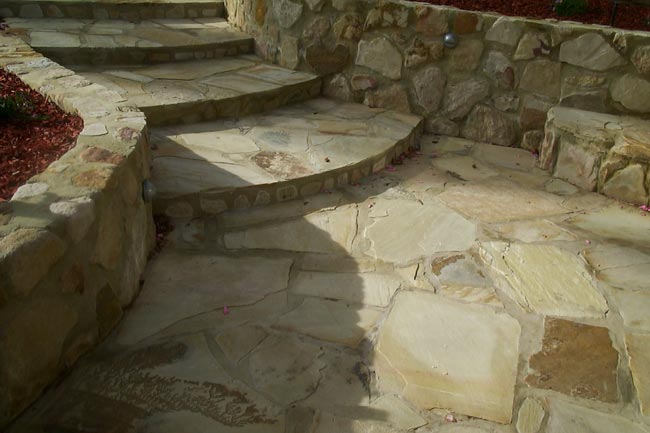
If you’re researching sandstone pavers Melbourne and want a straight answer rather than a sales pitch, you’re in the right place. Natural stone paving covers a broad family of materials — sandstone, bluestone, travertine, granite, limestone, and more — and each behaves differently depending on where it’s installed, how it’s maintained, and what Melbourne’s climate demands of it. This guide covers every material, every application, and every common question so you can make a genuinely informed decision.
What Are Sandstone Pavers and Why Do Melbourne Homeowners Choose Them?
Sandstone is a sedimentary rock formed when layers of sand grains — primarily silica — are compressed and cemented together over geological time. The result is a stone with a warm, earthy colour palette that ranges from creamy buff and ochre through to rich terracotta and cool grey, depending on the mineral content at the quarry of origin.
For Melbourne’s outdoor lifestyle — where alfresco entertaining, pool surrounds, and garden pathways are central to how people use their homes — sandstone pavers deliver a natural warmth that engineered materials struggle to replicate. When you walk across a well-laid sandstone patio on a summer evening, the stone retains a comfortable temperature underfoot, which is part of its continued appeal for outdoor living spaces.
Sandstone is available in a range of surface finishes, including natural riven (split along the stone’s natural grain), honed (smooth but non-reflective), sawn (cut faces with a consistent texture), and bush-hammered (textured by mechanical impact). Each finish changes both the appearance and the practical performance of the paver, particularly in relation to grip and maintenance requirements.
The natural riven texture of sandstone is one of its most practical assets outdoors — the uneven surface provides inherent grip underfoot in wet conditions, which is why it has been a long-standing choice for garden pathways and informal entertaining areas across Melbourne’s inner and outer suburbs.
What Are the Disadvantages of Sandstone Pavers?
Honest advice matters when making a significant paving investment, so the disadvantages of sandstone deserve a direct answer rather than being buried in promotional copy.
Porosity. Sandstone is a relatively porous stone. Without an appropriate penetrating sealer applied after installation and periodically re-applied over the life of the paving, it can absorb moisture, cooking oils from barbecue areas, leaf tannins, and other organic matter. Staining is generally reversible if treated promptly, but unsealed sandstone in a high-traffic entertaining area will require more active maintenance than a denser stone.
Pool surrounds. This is the most significant limitation of sandstone, and it’s worth being explicit about. Sandstone is composed of sand particles bound together by silica, iron oxides, clay minerals, or calcite . Salt water and pool chemicals contain acids that react with calcite, gradually dissolving the bonding material and causing the stone to delaminate, spall, or crumble at the surface. Sealing sandstone does not protect it from this reaction — a sealer reduces porosity but cannot alter the stone’s mineral composition. For salt-water or chlorinated pool surrounds, denser stones such as bluestone or granite are the more durable choice.
Softness relative to igneous stones. Sandstone is softer than granite or basalt (bluestone). Heavy furniture without protective feet, dropped tools, or mechanical impact can scratch or chip the surface. This is manageable with basic care but is a genuine consideration for high-traffic commercial applications or driveways with heavy vehicle loads.
Thermal movement. Like all natural stone, sandstone expands and contracts with temperature. Melbourne’s temperature range — from summer days above 40°C to winter nights close to freezing — means adequate expansion joints and proper bedding are essential to prevent cracking over time. A skilled installer will account for this in the substrate and jointing design.
None of these limitations disqualify sandstone from being an excellent paving choice in the right context. For dry patios, garden pathways, step surrounds, feature walls, and non-pool entertaining areas, well-sealed sandstone performs reliably and ages beautifully.
Is Sandstone Paving Slippery? Understanding P-Ratings for Melbourne Outdoor Areas
Slip resistance in outdoor paving is measured in Australia using the Wet Pendulum Test, which assigns a P-rating from P1 (low slip resistance) to P5 (very high slip resistance). For outdoor areas exposed to rain and moisture, a minimum P3 rating is generally expected, while pool surrounds and ramps typically require P4 or P5.
The slip resistance of sandstone depends heavily on its surface finish:
Natural Riven
The uneven, split surface provides the best natural grip. Recommended for garden pathways, informal patios, and areas where water runoff is likely.
Sawn / Sandblasted
A controlled texture produced mechanically. Consistent grip across the surface, suitable for step treads and entertaining areas where a cleaner aesthetic is preferred.
Honed Smooth
More aesthetically refined but can become slippery when wet. Best reserved for sheltered or covered outdoor areas, or interior spaces, rather than fully exposed paving.
Bush-Hammered
Mechanically textured surface with good slip resistance. A practical choice where grip is a priority without sacrificing a natural stone appearance.
For pool surrounds specifically, sandstone should be evaluated carefully and, where used, only in a natural or sawn finish with appropriate consolidation treatments. Many stone specialists recommend transitioning to bluestone, granite, or limestone for areas directly adjacent to the water’s edge, reserving sandstone for the broader pool deck further from the coping line where salt exposure is lower.
Which Is Smoother — Sandstone or Granite?
This question tends to arise when homeowners are comparing materials for a specific application and want to understand the tactile difference between the two stones.
Granite is an igneous rock — formed from cooled magma — with a dense, tight-grained structure that can be polished to a mirror-like finish. In its polished form, granite is notably smoother and more reflective than most sandstone finishes. However, polished granite outdoors becomes a slip hazard when wet and is generally not recommended for exterior paving applications in its high-gloss form.
Sandstone in its natural riven or sawn state has a more textured, grainy surface that reads as warmer and more organic. Honed sandstone can approach a smooth finish, but the inherent grain of the stone means it rarely achieves the same gloss level as polished granite.
For outdoor paving in Melbourne, the more relevant comparison is between sawn or sandblasted finishes across both stones — in which case the surface textures are broadly comparable, with granite being slightly denser and harder underfoot. The practical preference often comes down to colour, thermal comfort (granite can feel hotter in direct sun), and the overall aesthetic of the project rather than a simple smooth/rough comparison.
What Does Vinegar Do to Sandstone — and to Granite?
This is one of the most commonly searched natural stone maintenance questions, and the answer applies to multiple stone types in ways that matter for long-term care.
Vinegar and sandstone
Vinegar is an acetic acid with a pH typically in the range of 2–3. Sandstone contains calcite — the mineral that cements its sand grains together — which reacts chemically with acids. When vinegar contacts sandstone, the acetic acid dissolves the calcite, weakening the bond between sand particles and causing etching, surface dulling, and over time, structural surface damage. Even diluted vinegar used regularly will have a cumulative degrading effect. The damage is a physical change to the stone’s mineral structure rather than a surface stain, which means it cannot simply be cleaned away.
The same caution applies to limestone and travertine, both of which are calcium carbonate-based stones with a similar vulnerability to acid.
Vinegar and granite
Granite is classified as a siliceous stone — its primary minerals are silicates (quartz, feldspar, mica) rather than calcium carbonate, which makes it considerably more acid-resistant than sandstone, limestone, or travertine. However, granite used outdoors is typically sealed, and repeated vinegar exposure can degrade the sealer over time. Once the sealer is compromised, the underlying stone becomes more susceptible to staining, and prolonged acid exposure can dull the finish or cause surface etching in polished granite. The consensus from stone care bodies such as the Natural Stone Institute is that pH-neutral cleaners are the only appropriate option for all natural stone surfaces, including granite.
Cleaning Natural Stone — What to Use Instead
- Use a pH-neutral stone cleaner or a mild solution of pH-neutral dish soap and warm water for regular cleaning.
- Blot (do not wipe) spills immediately — wiping spreads staining agents across the surface.
- Diluted hydrogen peroxide is a safer alternative for light staining on sandstone, marble, bluestone, and travertine.
- Avoid all products containing citrus, lemon, or bleach, as these are acidic and will damage calcareous stones.
- For outdoor sandstone paving, a penetrating breathable sealer should be re-applied as recommended by the manufacturer — outdoor surfaces typically require re-sealing more frequently than indoor ones due to UV and moisture exposure.
Are Bluestone Pavers Melbourne’s Most Versatile Natural Stone?
If sandstone is the warmer, more organic choice in Melbourne’s paving palette, bluestone pavers are the timeless, all-conditions workhorse. Bluestone is a dense basalt — an igneous rock — and its properties are fundamentally different from sedimentary sandstone.
Melbourne has a particular relationship with bluestone. The stone has been used in this city’s footpaths, cobblestone lanes, kerbstones, and public spaces since the mid-1800s. In the city’s inner suburbs, original bluestone cobbles still line many heritage laneways — evidence of the stone’s durability across more than a century and a half of Melbourne weather.
Bluestone paving Melbourne homeowners choose today is typically sawn, honed, or sandblasted, and available in contemporary large-format sizes that suit both heritage and modern architectural styles. Its cool blue-grey tone pairs naturally with timber, steel, concrete, and rendered surfaces, making it adaptable across a broad range of outdoor design directions.
Where bluestone genuinely excels
Its high density makes it appropriate for demanding applications where sandstone would require more careful management. Driveways, pool surrounds, and high-traffic commercial paving are all areas where bluestone’s density, low water absorption, and inherent resistance to surface damage are meaningful advantages. Blue stone pavers Melbourne suppliers will typically offer bluestone in both honed and sandblasted finishes — the latter being the recommended choice for wet areas due to its superior grip.
For pool coping Melbourne projects, sandblasted bluestone is a widely specified solution. “Its colour stability under UV exposure is a meaningful advantage, though like all dark stones, bluestone absorbs heat in direct sun — bare feet on an exposed bluestone coping on a Melbourne summer afternoon will feel the difference. Sandblasted finishes dissipate heat marginally better than honed surfaces, and shade structures or orientation planning can meaningfully reduce surface temperatures.
Travertine Paving — Is It Right for Melbourne’s Climate?
Travertine is a form of limestone deposited by mineral springs, characterised by its natural voids and veined appearance. In indoor applications, travertine’s warm ivory, beige, and walnut tones give it a refined, European character that is genuinely beautiful. For outdoor paving in Melbourne, it deserves a more nuanced assessment.
Travertine is porous by nature — its characteristic pits and voids are part of its visual identity and part of its maintenance challenge. Outdoors, these voids can collect debris, moisture, and organic matter, which in Melbourne’s more humid winters can lead to mould growth if the stone is not sealed and maintained regularly. The traditional solution is to fill the voids with a matching cement or grout during installation before sealing; unfilled travertine is generally not recommended for exterior paving applications.
Like sandstone, travertine is a calcareous stone and is acid-sensitive. It should not be used directly adjacent to salt-water pool edges. For broader pool decks with appropriate consolidation treatments, sealed travertine can work, but the material requires more active maintenance than bluestone or granite in this context.
Where travertine truly shines outdoors is in sheltered alfresco areas, covered entertaining spaces, and garden patios where UV exposure and moisture levels are managed. Its travertine French pattern lay — combining four standard sizes in a rectilinear pattern — remains a design signature for Mediterranean-influenced Melbourne outdoor spaces and continues to be specified by architects and landscape designers for its visual rhythm and sense of scale.
Crazy Paving Melbourne — Old Aesthetic, Modern Revival
Few paving styles divide opinion as quickly as crazy paving — and few have made as convincing a comeback in contemporary Melbourne landscape design. The term refers to paving laid in irregular, organic shapes without a uniform grid pattern, creating a mosaic-like surface with natural variation in piece size, outline, and joint width.
The 1970s associations of crazy paving as a dated suburban choice have largely been displaced by a new generation of Melbourne homeowners discovering what the technique actually offers: a genuinely handcrafted, one-of-a-kind surface that no two projects replicate. When executed well with quality stone and skilled installation, crazy paving Melbourne delivers a texture and visual interest that regular grid paving cannot.
The most popular stones for crazy paving in Melbourne are bluestone and sandstone, though limestone and granite crazy paving are also available. Bluestone crazy paving Melbourne is particularly sought for its cool, sophisticated tone, which sits comfortably alongside contemporary architecture without feeling rustic or aged. Sandstone crazy paving offers warmer earthy tones and a more organic feel, well suited to garden pathways, cottage-style landscapes, and informal entertaining zones.
Installation quality matters significantly with crazy paving. The joints need to be consistent in depth and appropriately jointed to prevent water pooling, weed ingress, and edge chipping. A properly bedded and grouted crazy paving surface is durable and low-maintenance; a poorly installed one develops problems quickly. When requesting quotes for crazy paving Melbourne projects, ask installers specifically about bedding depth, grout type, and drainage management.
Pool Coping Melbourne — Choosing the Right Stone for Safety and Style
Pool coping is the capping stone or paver that sits at the edge of a swimming pool, covering the pool shell’s top edge and providing a finished transition between the pool and the surrounding paving. It serves both structural and aesthetic functions — sealing the edge of the pool structure, providing a grip surface for swimmers, and framing the overall pool design.
Material selection for pool coping Melbourne should be guided by three priorities: slip resistance, chemical resistance (particularly for salt-water pools), and thermal comfort underfoot during Melbourne’s summer months.
Bluestone Coping
Sandblasted bluestone is among the most frequently specified pool coping choices in Melbourne. Dense, chemically resistant, and with reliable P4+ slip ratings when sandblasted. Colour-stable under UV. Suitable for both fresh-water and salt-water pools.
Granite Coping
An igneous stone with excellent density and chemical resistance. Available in a range of natural tones. Sawn or sandblasted finishes are preferred over polished for wet areas. Can retain heat in direct sun — a consideration for Melbourne summer days.
Limestone Coping
Lighter in colour than bluestone, limestone has good thermal properties and a refined aesthetic. Limestone suits fresh-water pools where its lighter tone and thermal comfort are genuine advantages. For salt-water pools, limestone is not recommended as a coping material regardless of grade — its calcium carbonate composition reacts with the acidic chemistry of salt-water systems in the same way as travertine, and no sealer or grade selection reliably prevents this over time. Bluestone or granite are the appropriate coping choices for salt-water pool edges.
Travertine Coping
Popular for its warm Mediterranean aesthetic. Requires a high-quality consolidating sealer for pool edge installation. Best suited to fresh-water or low-chlorine pools; specialist advice is recommended before specifying for salt-water pools.
Sandstone Coping
Used on pool decks away from the immediate water edge. Not recommended as the primary coping material for salt-water pools. Sandstone’s inherent porosity and variable mineral composition make it poorly suited to sustained chemical and salt exposure at the pool edge, regardless of binder type.
Coping profiles are available in bullnose (rounded edge), drop face (a vertical return that creates a waterfall edge aesthetic), and square edge formats. The bullnose profile is the classic choice for traditional pool designs; drop face coping is increasingly common in contemporary Melbourne pool design where the pool shell is raised and the coping creates a finished visual edge.
Stack Stone Melbourne and Wall Cladding — Adding Vertical Dimension to Outdoor Design
While most paving discussions focus on horizontal surfaces, some of the most impactful natural stone applications in Melbourne outdoor design are vertical. Stack stone Melbourne — thin, irregularly shaped stone pieces applied in layered horizontal courses to create a stacked stone wall effect — has become one of the dominant feature elements in contemporary outdoor entertaining areas.
Stackstone Melbourne installations are typically used as feature retaining walls, garden bed borders, outdoor kitchen surrounds, pool equipment concealment walls, and facade accents on residential extensions. The material creates substantial visual weight and textural interest without the labour of traditional dry-stone walling, and the range of stone types and colour tones available means it integrates with almost any architectural direction.
Wall cladding Melbourne projects use similar principles but often employ larger, flatter panels or slab-cut stone rather than the irregular stacked profile. Bluestone wall cladding, limestone panels, and sandstone split face are all used across residential and commercial applications in Melbourne, providing a durable exterior surface with strong material character.
From a practical standpoint, stack stone Melbourne installations require proper waterproofing behind the stone on any wall in contact with soil, and an appropriate adhesive or fixing system rated for exterior use. The wall’s base drainage and weep provisions also matter — a well-built stack stone retaining wall manages water effectively and holds its integrity for decades.
Limestone Paving and Granite Pavers — Where Do They Fit?
Limestone paving Melbourne
Limestone occupies an interesting position in the Melbourne paving market. Its soft, muted tones — creamy whites, warm beiges, and occasional grey veining — give it a quieter, more restrained character than sandstone or bluestone. Well-selected and properly sealed limestone performs well in patios, garden paths, and pool areas, though stone selection needs careful attention for salt-water pool applications, as not all limestone grades perform equally.
Limestone pavers work particularly well in contemporary Melbourne homes where a neutral, considered material palette is the design direction. Paired with light-toned rendered walls, timber, and planted borders, limestone creates an outdoor space that feels calm and cohesive rather than visually busy.
Granite pavers Melbourne
Granite is among the hardest and densest natural paving materials available — a characteristic that makes it exceptionally durable for high-load applications including driveways, commercial paths, and areas with heavy foot traffic. Granite pavers are dimensionally stable, highly resistant to salt and chemical exposure, and do not require the same maintenance intensity as more porous stones.
The perception that granite is declining in popularity relates primarily to highly polished, veined granite countertops from the 1990s and early 2000s in kitchen design — a very different application from outdoor paving. As an outdoor paving material, granite in sawn, sandblasted, or flamed finishes remains a practical and enduring choice, particularly for pool surrounds, driveways, and commercial applications. Design trends in indoor surfaces have relatively little bearing on granite’s suitability or continued use in Melbourne outdoor paving.
Garden Steppers and Pathway Paving — Designing Outdoor Flow in Melbourne Gardens
Steppers Melbourne — individual stone pavers or slab pieces placed at intervals through garden beds to create a pathway — are one of the most practical and visually satisfying natural stone applications in residential landscaping. They work at any scale, from a modest garden linking a side gate to a back door, to sweeping landscaped pathways across larger Melbourne properties.
Material choice for steppers typically prioritises durability and surface grip over elaborate aesthetics, since they’re subject to repeated foot traffic, seasonal wet conditions, and often partially embedded in planted ground. Bluestone is a reliable and popular choice, particularly in larger formats (600x900mm or 900x900mm) that create a confident stride without feeling cramped. Sandstone in natural riven finish is warmer and works well in cottage or native garden settings.
Placement and spacing matter as much as material. Steppers should be set at a natural stride length — typically 600–650mm centre to centre depending on typical user — and bedded level with or slightly above the surrounding lawn or planting to allow mowing without obstruction. Setting steppers too high above the lawn line creates a trip hazard; too low and they gather water, moss, and debris.
Are Natural Stone Pavers Good for Melbourne Weather?
Melbourne’s climate is genuinely demanding on exterior materials. The city’s famous variability — summer days that can exceed 40°C followed within days by cool change conditions, wet winters with ground frosts in outer suburbs, UV intensity, and humidity cycles — means paving materials need to handle thermal movement, moisture, and freeze-thaw dynamics across a wide range.
Dense igneous stones — bluestone, granite — handle Melbourne’s temperature extremes well. Their low porosity limits moisture absorption, which reduces the freeze-thaw cycling risk that can cause spalling in more porous stones. Sandstone, travertine, and limestone in quality grades also perform well when properly sealed and installed on adequately drained substrates, though they benefit more from the protective role of a sealer than denser stones.
UV fading is worth noting for highly coloured sandstones — some vivid ochre or russet tones will soften and mellow over years of Melbourne sun exposure. Many homeowners find this ageing process contributes positively to the character of their paving, but if colour consistency over time is a priority, a lighter, more neutral sandstone or a UV-stable stone like bluestone or granite is worth considering.
In Melbourne outdoor design, the current direction across residential projects is toward natural material palettes — stone, timber, and planted surfaces — replacing the stark concrete and rendered-only schemes that defined the 2010s. Sandstone pavers, bluestone, and stack stone are all beneficiaries of this broader shift toward texture, warmth, and material honesty in outdoor spaces.
Sealing and Maintaining Natural Stone Paving — Practical Guidance
Sealing natural stone is one of the most discussed and most misunderstood aspects of paving maintenance. The key principles to understand before making decisions:
Sealers are penetrating impregnators, not coatings. Quality stone sealers used in exterior paving work by penetrating into the stone’s pore structure and reducing moisture and oil uptake — they do not form a film on the surface. This means a correctly applied penetrating sealer does not change the stone’s appearance (or changes it only minimally) and does not affect its slip resistance. Avoid topical sealers that leave a visible coating on exterior paving — these can trap moisture, peel, and create a slip hazard.
Sealing is not a substitute for correct stone selection. A sealer reduces porosity but cannot change the stone’s mineral composition. A sealer cannot make sandstone chemically resistant to pool salt water. Selecting the right stone for the application is the primary protective decision; sealing provides additional protection within that stone’s natural performance range.
Outdoor re-sealing frequency. Exterior paving is exposed to UV, mechanical wear, and moisture cycling that degrades sealer performance faster than interior surfaces. A general benchmark for outdoor stone sealing is to re-apply every one to two years for high-exposure areas, though the specific product’s technical data should always be the primary reference. Testing is straightforward — if water no longer beads on the surface and absorbs into the stone instead, the sealer has exhausted its effective life.
Stone Paving Maintenance — Practical Checklist
- Clean regularly with a pH-neutral stone cleaner — avoid vinegar, bleach, citrus-based products, and general household cleaners on all natural stone surfaces.
- Re-seal outdoor natural stone paving when water no longer beads on the surface — typically annually or biannually depending on exposure and product.
- For sandstone around pool areas: use a consolidating sealer specifically rated for moisture-exposed stone; check with your supplier before specifying for salt-water pool edges.
- Lift and remove leaf litter promptly — leaf tannins are a common cause of staining on light-coloured sandstone and limestone.
- Place furniture pads under outdoor furniture on stone paving to prevent scratching — particularly relevant for softer sandstone and limestone surfaces.
- Address grout or mortar joint failures promptly — open joints allow water ingress beneath the paving bed, which accelerates deterioration.
Frequently Asked Questions About Natural Stone Paving in Melbourne
Melbourne Outdoor Paving Design Trends — What’s Current in 2026
Melbourne’s outdoor design direction in 2026 is distinctly material-focused. The retreat from minimalist, near-monochrome schemes toward surfaces with genuine texture, depth, and natural origin has accelerated through the mid-2020s, driven in part by the pandemic-era rediscovery of outdoor living and sustained by Melbourne’s deeply ingrained culture of alfresco entertaining.
Large-format natural stone. Oversized paving slabs — 900x600mm, 1200x600mm, and beyond — continue to dominate contemporary Melbourne outdoor projects. The reduced number of joints creates a cleaner, more expansive visual field while the stone’s natural character still provides the warmth and variation that large concrete or porcelain slabs cannot replicate in the same way.
Mixing stone types intentionally. Rather than single-material paving throughout, Melbourne landscape architects are increasingly specifying complementary stone combinations — bluestone for primary paving areas transitioning to sandstone for garden borders, or travertine entertaining areas with bluestone steppers leading into lawns. The deliberate contrast of stone textures and tones creates visual interest and defines spatial zones without requiring physical barriers.
Vertical stone integration. Stack stone Melbourne and wall cladding Melbourne applications have moved from occasional accent features to integral parts of Melbourne outdoor design. Garden walls, retaining structures, outdoor kitchen surrounds, and fire pit installations routinely incorporate stacked or panel-clad natural stone, bringing the visual richness of the horizontal paving plane into the vertical dimension.
Pool design integration. The pool in contemporary Melbourne design is less a standalone feature and more a component of a coherent outdoor room. Consistent material specification across pool coping Melbourne, pool deck, entertaining area, and connecting pathways — sometimes with a contrasting accent stone at the water’s edge — creates a resolved, unified composition rather than a series of separately considered surfaces.
Sustainability and longevity as value drivers. Natural stone’s lifespan — in quality stones installed correctly, measured in decades rather than years — has become an explicit consideration as Melbourne homeowners become more conscious of the lifecycle cost and environmental footprint of outdoor materials. A sandstone or bluestone patio that ages gracefully over thirty years represents a different value proposition from a composite or concrete surface requiring replacement within fifteen.